ASCE-NCS SEI Tour - Mass Timber Roof Site Visit
Mass Timber Roof Site Visit – Truesdell Elementary School Modernization
Click HERE for the registration link.
(Note: Registration for this event is free but limited to the first 20 participants, with registration closing on October 23, 2024.)
Important registrant info:
- Come with proper PPE (e.g., Hard Hat, Safety Glasses, Boots, Gloves, Long Pants).
- Stop and check in at the construction trailer.
- Day of tour point of contact: David Pirnia, 240-205-1946.

ASCE NCS-SEI October 2024 Meeting
Reusing Existing Substructure – Considerations and Options for Testing and Design
Click HERE for the registration link.
“Reusing Existing Substructure – Considerations and Options for Testing and Design” With limited funding but high levels of need, engineers must be creative in addressing critical infrastructure needs. Cost-effective options are deck or superstructure replacement, but will these options provide the service life needed to match the rehabilitated deck or superstructure? How do you evaluate the existing substructure and what are the considerations? The presentation addresses these questions while walking through real-world case studies.
Meeting Format: Virtual
Time: Thursday, October 24th at 11:30-1:00 PM (Presentation will start at Noon)
Virtual Link: The meeting link will be sent to all virtual attendees following registration.
Cost of Attendance: Virtual ($10)
Attendees will receive (1.0) Professional Development Hour (PDH).
About the Speaker

Micah S. Ceary, PhD, PE, DBIA
Design Engineering Program Manager
Project Development Program Area
Structure and Bridge Division
Virginia Department of Transportation (VDOT)
Micah S. Ceary, PhD, PE, DBIA, Design Engineering Program Manager for the Structure and Bridge Division’s Project Development Program Area, Virginia Department of Transportation. The Project Development Program Area is responsible for VDOT in-house design, coordination of consultant design, contract management, and oversight of Tier 2 projects. Before joining VDOT, Dr. Ceary worked for 24 years on Design-Build and Design-Bid-Build projects from Maryland to South Carolina. During this time, Dr. Ceary's work includes rehabilitation and repair for structures ranging from the Chesapeake Bay Bridge to small structures on secondary roads. During Dr. Ceary’s time at the University of Maryland, the focus of his graduate work for both thesis and dissertation was on the investigated in-situ presence and characterization of delayed ettringite formation in Maryland.
All registered and paid attendees will be provided a PDH at their request. Meeting links are for individual registrants and may not be shared or used in a group viewing setting.
March 26, 2025: Establishing a Shear Load Transfer Mechanism in Shallow Concrete Pier Caps via 3D FE Analysis and Crack Modeling
Establishing a Shear Load Transfer Mechanism in Shallow Concrete Pier Caps via 3D FE Analysis and Crack Modeling
Click HERE for the registration link.
Minnesota Department of Transportation (MnDOT) tasked WSP with inspecting and evaluating a series of pier caps on approach spans of two sister bridges that carry Trunk Highway (TH) 77 bridge over the Minnesota River. These pier caps were relatively shallow supported on two rectangular columns. The initial load rating analysis performed using traditional Strut-and-Tie Method (STM) resulted in poor ratings (given the geometrical restraints for STM analysis set forth by AASHTO LRFD (i.e., minimum angle between struts and ties). The sectional method gave better results, but it was still unsatisfactory in shear.
The WSP team developed a full 3D Finite Element modeling framework for these caps that leveraged solid elements to simulate concrete and discrete modeling of all internal reinforcement. Based on observed state of stresses in the as-designed model, cracks were then introduced into the model to approximate the state of non-linearity. Presence of these discontinuities in the concrete continuum allowed for development of a realistic stress field and shear transfer mechanism within concrete by effectively engaging internal reinforcement. The refined analysis indicated presence of a viable load path through evaluation of the 3D state of stresses, which resulted in satisfactory shear load ratings according to LRFR methodology.
Learning Objectives:
1) Recognize the limitations of traditional shear evaluation methods (STM and sectional approaches) for shallow concrete pier caps under AASHTO LRFD geometric constraints.
2) Understand how refined 3D finite element modeling—including discrete reinforcement and crack representation—can reveal realistic shear load paths in reinforced concrete bridge components.
3) Apply results from advanced 3D FE analyses to support bridge load rating decisions, demonstrating how viable load paths can lead to satisfactory shear ratings under LRFR when conventional methods are insufficient.
Date: Thursday, March 26th, 2025 - 12pm
Virtual
Speakers: Soroush Fakhri Yazdi, Vice President, Structures Manager, Washington DC; Amir Gheitasi, Vice President, Structures Manager, Baltimore, MD
Soroush Fakhri Yazdi is an achievement-oriented senior structural engineer with an exceptional educational background and extensive finite element analysis experience. Recognized for superior research, problem-solving, and design skills, Soroush has over 16 years of experience in project management, review, and design of highway structures in several states. Soroush’s teaching experience at GMU’s Civil Engineering Department underscores his expertise and dedication to the field. His ability to impart knowledge in complex subjects such as Structural Analysis, Soil Mechanics, Steel Design, and Reinforced Concrete Design was recognized by the department, leading to an assignment to join the faculty as an Adjunct Professor.
Amir Gheitasi has diverse experience involving analysis, design, evaluation, and rehabilitation of bridges and highway structures, including long-span steel plate girders, curved steel plate girders, steel box girders, prestressed concrete girders, precast and cast-in-place concrete segmental, cable-stayed, and steel truss bridges. In addition, Amir is experienced in time-dependent staged-construction analysis, non-linear finite element analysis, soil-structure interaction, seismic analysis, load rating, load testing and structural monitoring. In addition, he has experience in precast-prestressed concrete and vertical industry and has provided services for design, construction, and rehabilitation of parking garages, data centers, and residential buildings. Amir has been involved with both highway and railroad bridge projects across north America with international exposure, along with progressive experience towards business development, project management and alternative delivery. Amir has also been actively involved in industry technical committees and has a proven track record of publications and presentations in peer-reviewed journals and conferences.
Flood Resistant Design Standards: ASCE 7-22 Supplement 2 and ASCE 24-24
Recent Updates to Flood-Resistant Design Standards
ASCE 7-22 Supplement 2 and ASCE 24-24
Click HERE for the registration link.
Flood risk is a growing concern for the built environment, and navigating the rapidly changing landscape of flood regulations can be challenging for designers. The presentation will provide an overview of the recent updates in two key ASCE standards: ASCE 7-22 Supplement 2 and ASCE 24-24, which together represent a significant shift in the criteria, loads, and other requirements for flood-resistant design.
Learning Objectives: 1) Recognize the fundamentals of flood hazards and flood-resistant design, 2) Understand the recent changes in the ASCE design standards for flood-resistant structures and how they will affect projects in flood hazard areas
Date: Thursday, February 26th, 2025 - Virtual
Virtual
Speaker: Matt Gilbertson, Senior Technical Manager, Simpson Gumpertz & Heger
Matt Gilbertson has diverse experience designing, investigating, and rehabilitating building and non-building structures. He specializes in evaluating flood hazards and designing structures to mitigate flood risk. His projects include designing buildings subject to flooding, evaluating existing facilities for flood risk, designing flood mitigation measures, and consulting on regulatory flood requirements. Matt is a member of Flood Load and Future Conditions subcommittees for ASCE 7-28, “Minimum Design Loads and Associated Criteria for Buildings and Other Structures,” and the committee for ASCE 24-24, “Flood Resistant Design and Construction.”
PT Presentation & Plant Tour
PT Presentation & Plant Tour
Learn about Post-Tensioning (PT) directly from the source
Click HERE for the registration link.
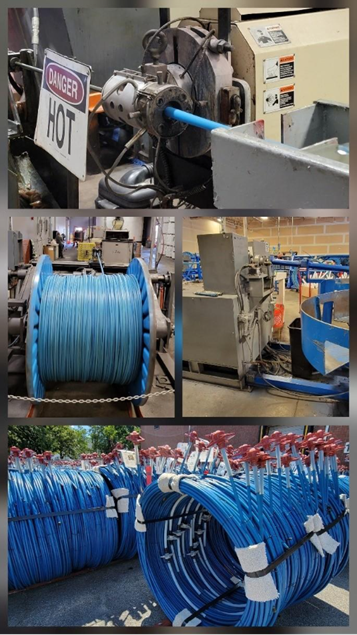
CCL USA team members will explain different PT systems, hardware, and equipment. They will discuss how PT designs are turned into shop drawings and describe the subsequent manufacturing process for PT tendons. The plant tour will follow, showcasing the manufacturing procedures and the quality control measures used to achieve and maintain PTI plant certification.
Date: Thursday, September 18th, 2025
Schedule:
- 11:30 AM: Arrival
- Noon: Lunch, Technical discussion, Q&A
- 1:00 PM: Fabrication Plant Tour
Location: CCL USA, 8296 Sherwick Ct, Jessup, MD
Dress Code: Active fabrication plant. Please wear pants, closed-toed shoes. Bring PPE (safety glasses)
**Limited capacity! Please sign up in advance and provide 24-hour notice if you need to cancel
CCL USA is the U.S. subsidiary of CCL International, established in 1935, and recognized as a pioneer and expert in post-tensioning worldwide. In addition to being a leading PT company, CCL USA is involved in specialized structural repair and strengthening projects. The company takes pride in its quality, innovation, expertise, and high customer satisfaction. CCL USA operates two PTI-certified plants in Maryland and Georgia, serving clients across the Northeast, Midwest, Mid-Atlantic, and Southeast regions.