2017-09: The Emerging Revolution
Written by Ranjit Sahai, PE, F.ASCE

The first revolution in surface transportation saw a shift in motive power from muscle to motor, i.e. from bicycle to automobile. The revolution cut down time five-fold to travel nonstop from the West to the East coast: 10-days for a bike vs 2-days for an automobile.
The tools we use to create design documentation, i.e. engineering drawing, also saw a revolutionary shift from paper drafting to computer-aided design and drafting. The revolution made it possible to extract engineering drawings automatically from 3D design models – an utterly new way to document engineering design.
Another revolution is emerging that is transforming how you model engineering design and how you use the model to construct the design. Think point-clouds and mixed reality.
Point-clouds are 3D photographs. A photograph is light recorded on a flat surface, i.e. X and Y axes. A pointcloud is light recorded in 3D, i.e. X, Y, and Z axes. A photograph is flat, a point-cloud has depth. Point clouds are used to capture the existing environment in 3D. Imagine turning on and pointing your smartphone camera toward your home and walking along the perimeter of its boundary. With depth sensing camera, such as Intel’s RealSense camera, and specialized software, you can capture your home’s existing environment in 3D in a point-cloud.
Mixed reality is a visual environment with two attributes. First, it is an environment in which a 3D design model overlays a point-cloud. For example, the proposed design of a sun-room addition overlays the existing environment around the home. Second, the design model senses and accommodates the existing environment. For example, the sunroom model senses the home’s point-cloud and flashes to highlight a conflict.
Imagine a construction worker wearing a mixed reality headset. He has no construction plans. He has no tape measure. Just his construction skill and building materials. His task is to build a complex steel frame bathroom pod. He inserts a chip in the headset. The chip contains a 3D model of the design. His headset projects the design in front of his eyes. He places the columns, beams, and braces exactly where he sees them. Construction done.
This pilot project was undertaken by Martin Brothers, a construction firm in California. Experience the revolution in this 80-second video clip online: click here.
2017-11: Sensory-Spatial Modeling Enables Design Simulation and Construction Automation
Written by Ranjit Sahai, PE, F.ASCE
Construction is stalled. A change in field conditions necessitates a design update. Engineer conceives a remarkable solution with no impact on project cost or schedule. A sketch communicates the proposed concept but the owner needs to visualize it juxtaposed against surroundings for line-of-sight alignments that can only be assessed in a 3D environment. How can this be done on the spot, while in the field, to eliminate the 2-week visualization effort? Sensory-spatial modeling to the rescue.
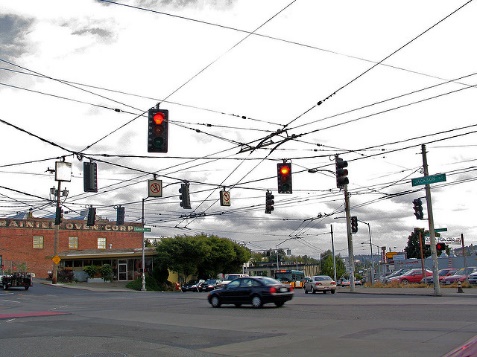
The visualization took an hour; not two weeks. The discovery of changed field conditions that necessitated a design update had been resolved without impact to schedule by eliminating the traditional visualization step by simulating the design juxtaposed against its real surroundings.
Let’s examine the above scenario in the context of a workflow enabled by sensory-spatial modeling, the emerging revolution in engineering design and construction.
The design to upgrade traffic control signals at an urban street intersection had required the installation of three new traffic signal poles. The location, height, and type of poles were chosen to accommodate the cluster of overhead utility cables.
It had taken two-years for construction funding to come through. When construction started, it was observed that clearance under overhead communication cables at two locations were 2-feet lower than when designed.
The solution requires changes in location of poles based upon their type: standard vs tee. The owner loved the concept but needed verification of under-clearance and driver line-of-sight parameters.
A sensory-spatial modeling enabled workflow eliminates distance measurement and removes the gap in time between concept selection and its visualization. Let’s see how.
The act of envisioning possible options and developing a creative solution requires cognitive thought that only a human mind with experience in the field can deliver.
In this instance, the contractor noted that he had already procured the three poles designed; and that it would take four weeks to procure new ones, if called for. Fortunately, the engineer discovered that switching poles between the design locations accommodated the lower utility clearances while satisfying design parameters. This meant that changes to design were limited to changing pole types and concomitant construction notes.
With the street intersection in full-view and the overlaid proposed design also visible concurrently as an overlay, through a device such as the Microsoft HoloLens, the engineer is able to use gestures to move proposed design elements – which in turn adjust the design model in real-time.
With the adjustments made, the contractor and the owner can put on the mixed reality modeling glasses and review the design before the field meeting is over. This makes possible significant savings in time from concept to visualization.
Next month we will look at how this and other technologies are leveraging design models to automate construction.
2018-02: Civil Engineers in Cinema
Production is, in a civilized society, the primary means of physical survival—and it is demanding work. Art is, on the other hand, nourishes the soul; it can relax you, recharge your batteries and provide the fuel you need to charge ahead against all odds.
The celebration of engineers and their achievements through art (literature, plays, poems, sketches, songs, cinema) is an exception in modern culture that celebrates celebrities. One such exception was the release last year of the IMAX film Dream Big. There is another organization you may not have heard of that celebrates civil engineers through cinema: sOlar eye communications (www.solareye.biz). I first heard of them in Fall 2015 in a newsletter from AISC when their documentary film Bridging Urban America (www.bridginguamericafilm.com) was released. The film is an inspiring story about Ralph Modjeski, a master bridge builder – his life and the signature bridges he built. I had alluded to this film in my article Your Medium Is Infrastructure in this Special Features > Civil Engineering and You article series.
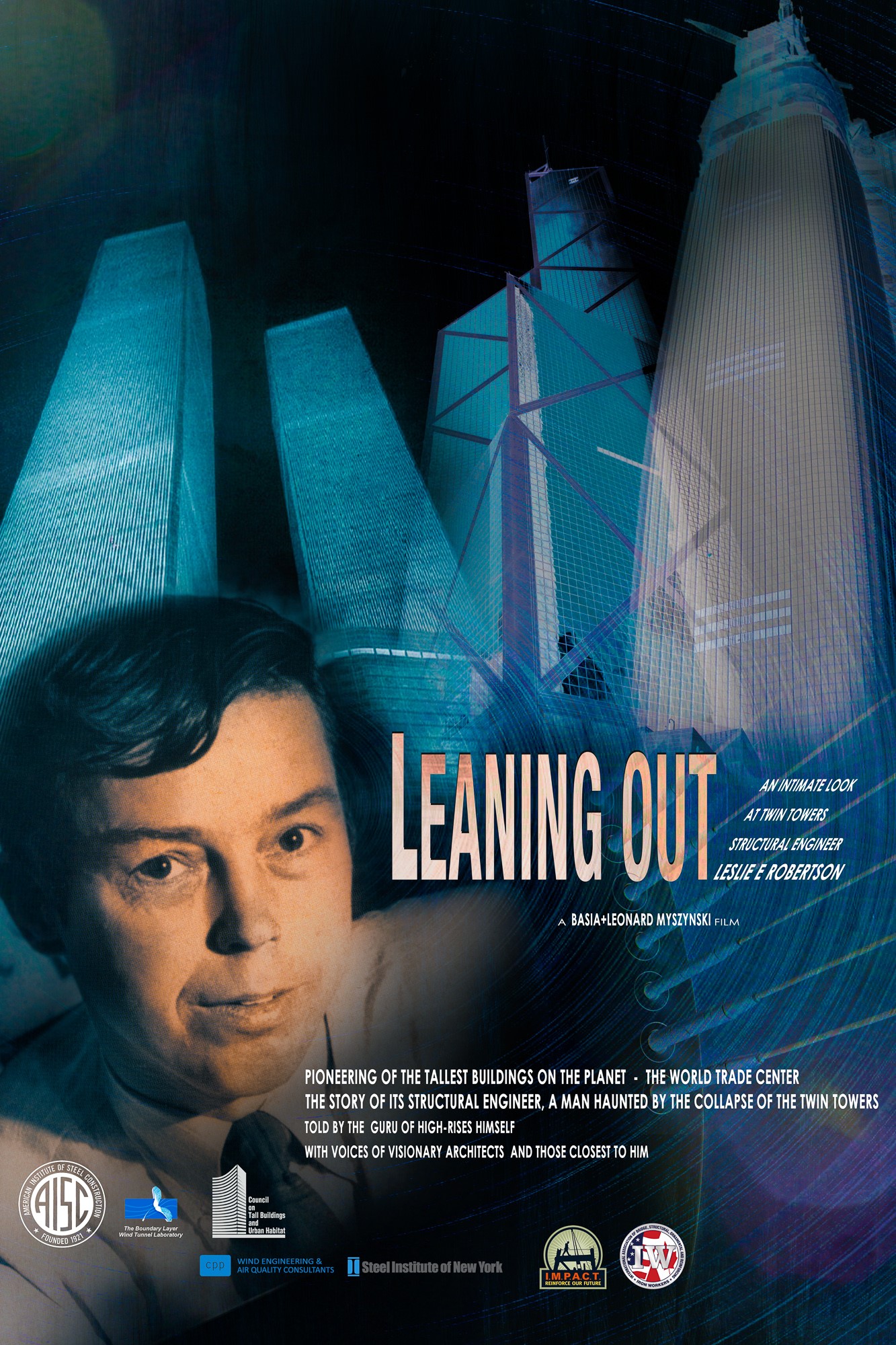
sOlar eye’s next film is titled Leaning Out. Its focus is on Les Robertson, a structural engineer, and on the monument to human ingenuity and achievement he engineered as the Twin Towers. The film footage is shot and post-production work remains before the film will be ready for release. If you wish to change our culture so it reaches a state when engineers and their accomplishments are celebrated as a matter of course in art, and to the time when kids look to engineering as an inspiring career, there is no easier way than to contribute to the post-production funding sOlar eye is looking for. Those looking to sponsor the film at any level are encouraged to contact Basia Myszynski, Filmmaker/Producer at
What does the title Leaning Out have to do with structural engineering and high rises? Basia answered thus, “As he describes it, Les was able to excel at specific extreme sports, such as wind surfing, mountain climbing, racing cars, because he leaned out. He found the ideal technique! I think it applies to his engineering innovations, iconic hi-rises and approach to collaborations. It’s a metaphor for his life philosophy; how he sees things based on his experiences. He really stands out. And remember, he’s seen a lot. 89 years old.”
Alignment Sows Significance
- Written by Ranjit Sahai, PE, F.ASCE
The larger your project in size, scope and complexity, the greater the number of teams involved in its planning, design, construction, and maintenance. Consequently, the diligence required of teams coming together for a successful outcome is much higher. That you must know how to apply scientific principles for civil works is a given. The larger the impact in size, scope and complexity you desire for your work, the greater the depth you must plumb in aspects other than scientific principles. In other words, it is the depth of understanding you develop about the “other aspects” of your profession, i.e. life itself that determines the complexity you can navigate with confidence for the successful outcome for your most ambitious projects.
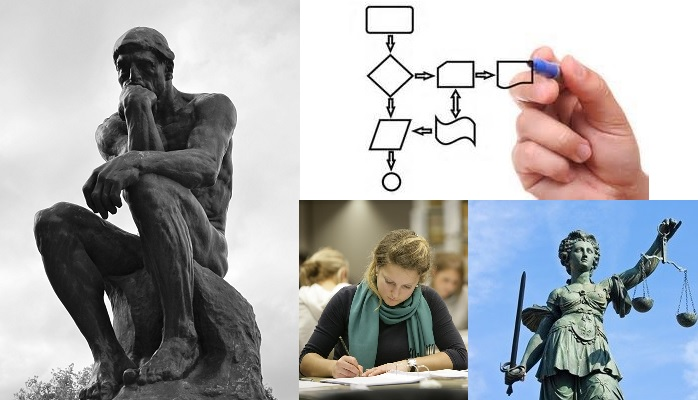
The disciplines that comprise the expanded horizon can broadly be classified under the concept of humanities, i.e. the methods we use to function effectively by ourselves and in teams. This includes the disciplines of philosophy and ethics, effectiveness and leadership, and legal and social.
The Leadership Training Committee (LTC) of ASCE organizes and delivers content at its annual Regional Leadership Training Conferences for new and emerging leaders within the ranks of its volunteer-run Sections and Branches. The content delivered, as evidenced by looking through the list of sessions LTC runs, covers other aspects of the engineering profession but scientific, i.e. the dramatically expanded horizon.
An owner receives bids for the design of a project component and chooses the lowest bid to hire a professional. Soon after assembling the project, the component fails. Investigation reveals that the component was the cheapest on the market and not properly tested or documented by the vendor. It also reveals that the professional was not very well versed in the proper design of such components. What steps taken by who and when could have minimized the risk of failure resulting in the loss of resource investment by all involved? This is the expanded horizon your profession demands for significance.
When you purposefully align your professional interest with your rational long-term self-interest, i.e. human life, through relevant disciplines in humanities, you sow the seeds of significance that harness the best within you to do your best work. The legends we discover when searching bodies of knowledge from our profession inspire us to commit to do the best we’re capable of every day, one day at a time in a purposefully woven sequence of events that lead to the significance we seek.
Calumet "K" by Merwin-Webster
Written by Ranjit Sahai, PE, F.ASCE
The novel, Calumet "K" by Samuel Merwin and Henry Webster, was published in 1901. An abridged edition of the novel, by Ranjit Sahai, PE, was published in the newsletter of the National Capital Section of ASCE (May 2020, and Oct 2020 to June 2021 issues). The eight episodes of the abridged novel have been compiled into a single PDF available at this link.
Setting the Stage
Calumet “K” inspires me to leap over seemingly unsurmountable hurdles. The novel was published in 1901. It is the story of Charlie Bannon, a construction manager, who knows what it takes to get things done in time and proceeds to do so against all odds—be it a lack of transportation, corruption, insubordination, or other unforeseen events. Charlie is the epitome of an efficacious, thinking, problem solving mind—a portrayal so rare in modern fiction.
The project
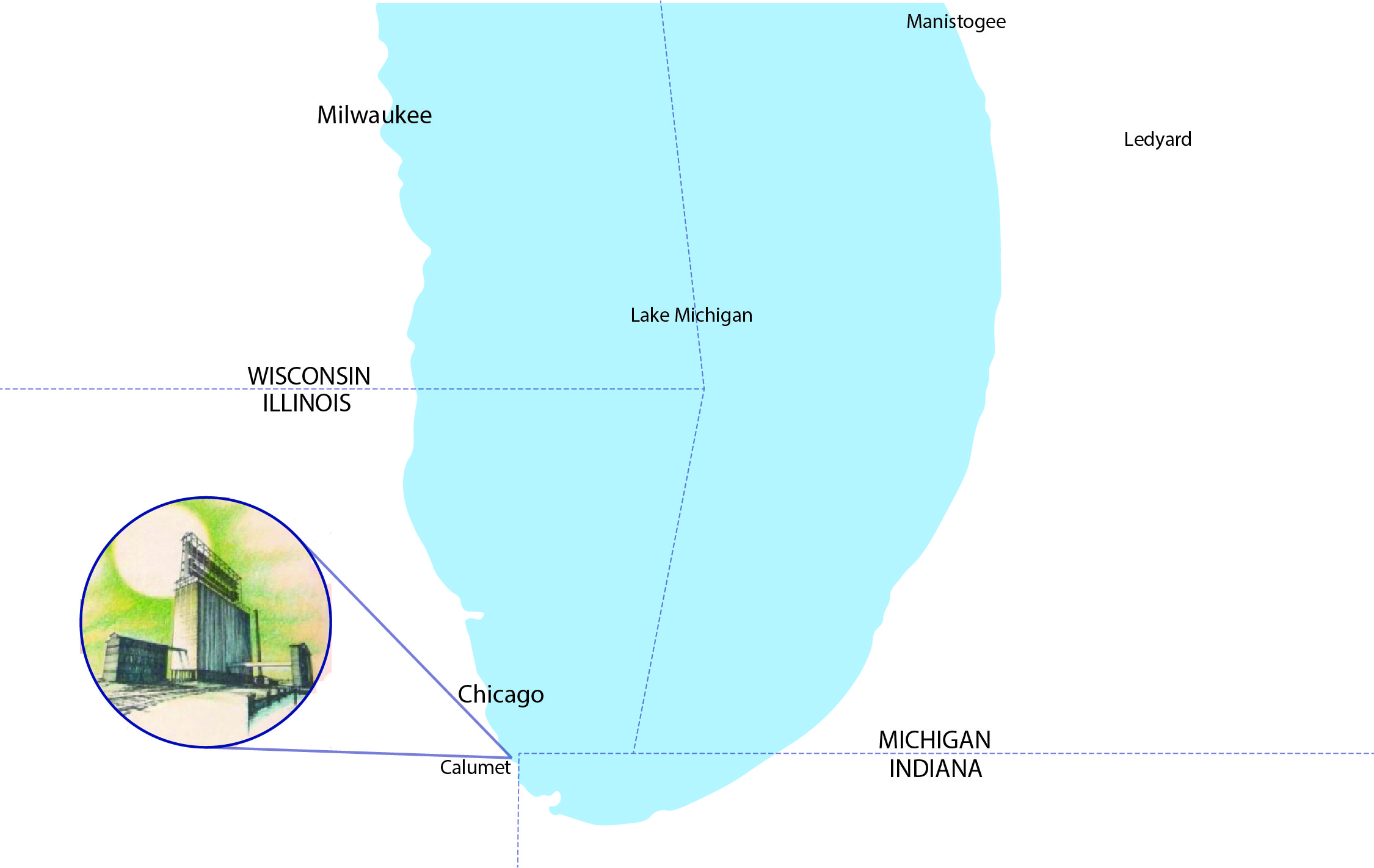
Calumet “K” is a grain elevator that must be built by the midnight of December 31, if the grain trading company that commissioned it is to avoid ruin. (The color illustration of the grain elevator above was cropped from an image on the cover of the novel republished in the 1960s.)
The location
Calumet is a small town in the southern suburbs of Chicago, Illinois. Ledyard, Michigan, a town North-East of Calumet and a major material supplier for the project, is a day ride away by railroad.
Historical backdrop
US Steel became the first billion-dollar corporation in 1901. Railroads are the dominant mode of surface transportation. Concrete reinforced with twisted steel reinforcing bars is gaining traction for the construction of major structures such as skyscrapers and bridges. US stock market crashes for the first time in 1901.
What’s to come
Starting with the October 2020 issue of the ASCE-NCS newsletter, the Calumet "K" Abridged Edition article series provides a front row seat, spanning several issues, to the story of the construction of Calumet “K,” and Charlie’s indomitable spirit.
About the author of the abridged edition
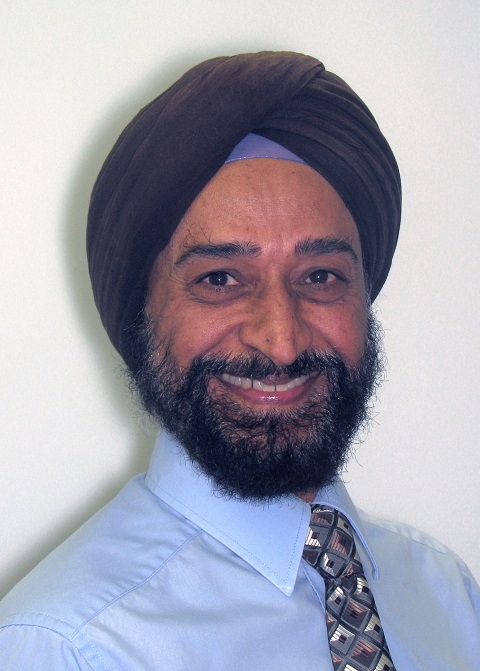
Ranjit, a Past President (2013–14) of ASCE-NCS, is a principal and founder of RAM Corporation, a firm serving State DOTs with a focus on traffic engineering design, stormwater facility inspections, and IT solutions for engineering workflows.