The American Society of Engineers - National Capitol Section hosted its annual Awards Banquet at the Hilton Arlington on Tuesday March 22, 2016. The evening was hosted by Jordan Pitt, P.E., Vice President ASCE-NCS 2015-16, Bernie Dennis, P.E., Chairman of the ASCE-NCS Scholarship Trust Fund, and by Scott Wolf, P.E., P.L.S., President ASCE-NCS 2015-16. Highlights of the evening included:
- Opening Remarks by Jordan Pitt followed by Centennial Celebrations update by Victor Crawford
- Keynote Address by Ranjit Sahai, P.E., F.ASCE, ASCE-NCS Past President 2013-14 on the topic of "Fostering Creativity in Engineering" that ended with a gift of Dr. Stuart G. Walesh's book "Introduction to Creativity and Innovation for Engineers" for each of the five Faculty Advisors
- Award of Scholarships worth $13,500 by Bernie to students from five universities in the region served by NCS
- Recognition by ASCE Faculty Advisors at CUA, GMU, GWU, HU, UDC of their outstanding seniors in civil engineering
- Recognition by Jordan and Scott of NCS Meritorious Service Awards to Kelly Cronin and Alex Rosenheim
- Recognition by Jordan and Scott of ASCE Life Members
- Recognition by Scott Wolf of Ranjit Sahai and Chris Manalo with the President's Appreciation Award for their leadership in leading the DC Report Card and Centennial Celebration Planning efforts respectively this year
Presented by Michael Trentacoste
Please click HERE to register by February 11.
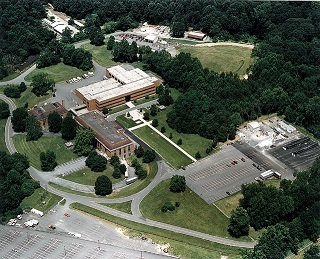
The FHWA Turner-Fairbank Highway Research Center (TFHRC) plays a key role in helping you meet transportation challenges now and in the future. Please join us on Tuesday, February 16, as Michael Trentacoste, Associate Administrator, FHWA Office of Research, Development, and Technology, discusses FHWA's TFHRC and emerging transportation technologies.
He showcases the value you receive from the materials, designs, policies, operations, and safety used in the highway systems you drive on. Deployment of such innovations enables you to move goods and people efficiently and safely while also contributing to the nation's economy. Today, as in the past, researchers and inventors continue to develop innovations and solutions to transportation challenges.
WHEN: Tuesday, February 16, 2016, 6pm - 8:30pm.
WHERE: Hilton Arlington, Gallery
FEE: $45 (if registering by Feb 11, 2016). $55 (Walk-ins and late registrations). $25 (Life members). $10 (Students).
One (1) PDH will be awarded for attendance.
 Michael F. Trentacoste has been the Associate Administrator for the FHWA Office of Research, Development & Technology, since January 2009. He leads and directs a comprehensive national research, development, and technology program designed to meet the needs and goals of the highway community and the nation’s highway transportation system. He also serves as the Director of the FHWA’s TFHRC, and is responsible for $70 million of new infrastructure, operations and safety research and development annually. Michael Trentacoste is a civil engineering graduate of Manhattan College and received a Master of Science in Transportation from Northwestern University. He is a registered Civil Engineer in New York.
Presented by Robert D. Stevens, ASCE 2015 President
Click HERE to register by September 14 to take advantage of Early Bird savings.

With a focus on your profession's future, and on helping you navigate upward in your chosen career, ASCE has been making a difference in this county for over a century. With a growing presence on the global stage, your Society is focusing on issues that are designed to elevate the profile of your profession to an even higher rung in society. Who could be better suited to helping you gain that perspective than the ASCE 2015 President Bob Stevens? During his term as President, he interacted with civil engineers and students across the world by speaking to groups ranging from 25 to over 7,000.
Past ASCE President Bob Stevens will discuss ASCE's strategic initiatives and describe some of his experiences around the world. He will focus on ASCE's continuing emphasis on technical activities, including the creation of ASCE's ninth technical institute-the Utility Engineering and Surveying Institute. He will also explain how you can help achieve the initiatives and solve pressing issues facing our country.
WHEN: Tuesday, September 20, 2016, 6pm - 8:30pm.
WHERE: Hilton Arlington, Gallery
FEE: $45 (if registering by Sep 14, 2016). $55 (Walk-ins and late registrations). $25 (Life members). $10 (Students).
One (1) PDH will be awarded for attendance.
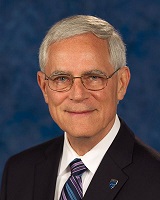 Bob Stevens was installed as the 2015 ASCE President at the 2014 Annual Meeting in Panama City, Panama. At the Annual Convention in New York City in October 2015, he became ASCE Past-President. He has been an active ASCE member for over 50 years, serving on the ASCE Board of Direction since 2012 when he was assigned to the Executive, Audit, and Strategic Planning Committees. With his election to President-Elect, he stepped down from his position as Chair of the Committee on Technical Advancement. He was also a founding governor and officer of ASCE's Transportation and Development Institute and Chair of the Technical Region Board of Governors. Throughout his career, he has worked in the transportation and water specialties of civil engineering leading environmental assessments, and the planning, design, and construction management of roads, bridges, rail, transit, airport, sewer, and water treatment projects.
Presented by Dr. A. Hunter Fanney
Registration information to come.
A Net-Zero Energy Residential Test Facility (NZERTF) has been constructed at the National Institute of Standards and Technology (NIST) in Gaithersburg, Maryland. The facility, completed and put into service in 2012, is being used to demonstrate that a home similar in size, aesthetics, and amenities to those in the surrounding communities can generate as much energy as it consumes on an annual basis while meeting the needs of a family of four. The facility will subsequently serve as a test bed to facilitate the development and improvement of methods of test and performance metrics for existing and future energy efficient technologies.
The living area of the NZERTF (252 square meters) is slightly larger than average size home (242 square meters) currently being constructed in the United States. Additionally, the NZERTF is providing experimental data for computer model validation studies and to quantify the energy impact of mechanical ventilation. Dr. Fanney will describe the design of the facility, the virtual family that resides in the facility, the instrumentation used in the experiment, present data collected during the first year of operation and discuss lessons learned.
WHEN: Tuesday, October 25, 2016, 6pm - 8:30pm.
WHERE: More information to come
FEE: More information to come
Dr. A. Hunter Fanney is a Senior Research Scientist in the Engineering Laboratory at NIST. Dr. Fanney joined NIST in 1977. He initially led a team that conducted experimental and analytical studies of solar water-heating systems. In 1984, he became leader of the Heat Transfer and Alternative Energy Systems Group. He was selected to lead NIST’s Energy and Environment Division in 2007, a position he held until being appointed as a Senior Research Scientist in 2013.
Presented by Michael Randolph, PE and Rebecca Nordby
Register HERE today!
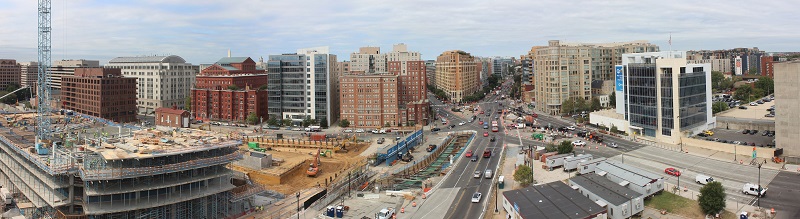
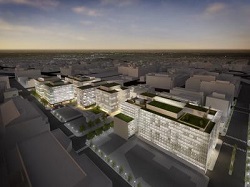
The Capitol Crossing Project has completed the first phase of construction for an elevated deck above Interstate 395 in Washington, D.C., and has begun vertical construction on the first building at Capitol Crossing, a three-block, seven-acre, 2.2 million-square-foot project that will consist of five mixed-use buildings. The completed work includes upgraded infrastructure such as a new high-voltage electrical line and new water mains. The second phase will consist of almost 30,000 square feet of ground-floor retail space with 11 stories of offices above, as well as completion of the highway deck over I-395 to E Street, NW.
The District of Columbia has long encouraged the development of a platform over I-395. Following an extensive environmental assessment, outreach to the affected communities and approval of the necessary permits, construction commenced at the end of March 2014. DDOT and many other agencies have worked closely with the developer and contractor to create a viable maintenance of traffic plan for the project during all phases of construction.
Michael Randolph, PE, Design Manager for STV Incorporated and Rebecca Nordby, Project Executive for Balfour Beatty Construction DC will be discussing the design and construction successes and challenges for the first phase of construction and present what will be in store for the completion of the Capitol Crossing Project.
WHEN: Tuesday, November 15, 2016, 6pm - 8:30pm.
WHERE: Hilton Arlington - 950 North Stafford Street, Arlington, Virginia
FEE: Early Registration: $45, Walk-In (pending availability)$55, Life Members $25, Students $10
Michael Randolph joined STV in 2002 and has served as the lead highway engineer for the environmental assessment phase and currently is the design manager for the transportation related improvements for the final design phase of the Capitol Crossing Project. He holds a B.S. in Civil Engineering from the University of Maryland and is a registered Professional Engineer in Washington DC, Maryland and Virginia.
Rebecca Nordby brings 19 years of local experience leading complex construction projects in the Washington DC area. With Balfour Beatty Construction, she has worked to deliver many projects in the District, including 2101 L Street NW and the design-build National Research Council for the National Academy of Sciences. Most notably, as project manager Ms. Nordby led the first phase of the high profile U.S. Capitol Visitor Center. Rebecca worked for several years on the preconstruction effort for Property Group Partners on the Capitol Crossing project and is now the on-site Project Executive responsible for execution of the work. She holds a B.A.E. in Architectural Engineering (Construction option) from Penn State and is a LEED Accredited Professional.
Presented by Jeff Seltzer, PE, Associate Director, Stormwater Management Division
District Department of Energy & Environment
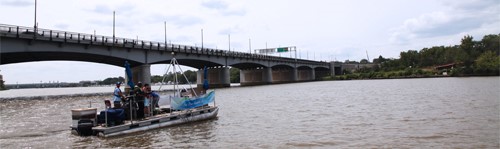 The Anacostia River Watershed covers portions of the District of Columbia, Prince George’s, and Montgomery County in Maryland. The Watershed is approximately 176 square miles in area and approximately 18 percent of its land area lies in the District. The river is entirely tidal in the District while the upstream land area in Maryland is primarily non-tidal.
The Anacostia River, once a pristine river is now degraded, mainly due to its highly urbanized character and decades of industrial and urban activities throughout the watershed. The river is the focus of large-scale restoration efforts by the District of Columbia government. The District Department of Energy & Environment (DOEE) has taken the lead in restoration efforts and is working to transform the Anacostia River into a fishable and swimmable river.
During the first Section Meeting of 2016, on January 19, Jeff Seltzer of the District's DOEE, discussed:
- The history of the Anacostia River and issues that have impacted its health
- Current conditions of the Anacostia River
- Modeling performed to determine the required level of effort to restore the river
- Current public initiatives to restore the river
- The outlook for accelerated restoration efforts leveraging public and private investments
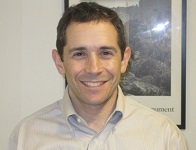 Jeff Seltzer is the Associate Director for the Stormwater Management Division at the DOEE. In this role, he is responsible for the District’s stormwater management initiatives that improve the quality of the District’s tributaries and rivers, and ensure compliance with federal stormwater requirements. He manages an annual budget of approximately $18M that is used for capital projects as well as the administration of the District’s stormwater program. Jeff is a Professional Civil Engineer with over twenty years of experience. Prior to joining DOEE, Jeff worked as a Program Manager for the District Department of Transportation where he was responsible for water quality initiatives and capital projects under the District’s Anacostia Waterfront Initiative. Additionally, Jeff was the manager of Capital Projects for the Anacostia Waterfront Corporation that was charged with redeveloping over 2,000 acres along the Anacostia River.
Presented By: Kevin Volbrecht, P.E., M.ASCE (Project Director-Package A) & Stephen Barna, P.E., M.ASCE (Director, Project Engineering)
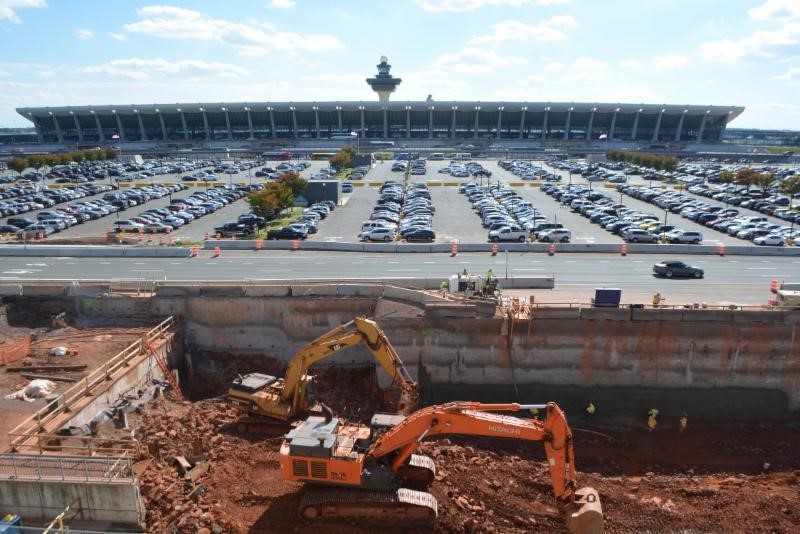
ASCE-NCS received an update on the Phase II progress for the 23-mile-long extension of the Metrorail System. Construction of the Silver Line, which will extend Metrorail from East Falls Church to Washington Dulles International Airport and west to Ashburn, is being managed by the Metropolitan Washington Airports Authority (MWAA) and will be operated by the Washington Metropolitan Area Transit Authority. The project is being constructed by Capital Rail Constructors. Phase 1 of the project opened in July 2014, and serves Tysons Corner, Virginia's largest employment center. Phase 1 runs from East Falls Church to Wiehle Avenue on the eastern edge of Reston and includes four stations. Construction began in March of 2009 and service opened in July 2014. Phase 2 picks up at the Wiehle-Reston East station and serves the Reston/Herndon area, the state's second largest employment concentration. It will run from Wiehle Avenue to Ashburn in eastern Loudoun County and include six additional stations. Once complete, it will provide a one-seat ride from Dulles International Airport to downtown Washington. Construction on Phase 2 began in 2013 and has an anticipated completion date of late 2019.
Kevin Volbrecht was born, raised, and educated in California, where he worked in the San Francisco Bay Area for 23 years on transportation projects that included extensions on the BART system. He also worked on the Ft. Lauderdale International Airport extension and the Miami Dade Transit system. In 2007, he became the Deputy Director in charge of all the construction on Phase 1. In 2014, Volbrecht became the Project Director for the $1.2B Package A (Mainline Stations and Systems) contract.
Stephen Barna has over 44 years of construction, construction management, design, and design management experience in the federal government and public sectors. Since joining the Dulles Corridor Metrorail Project as Senior Project Manager for Construction in early 2009, Mr. Barna has been responsible for the construction management of all Phase 1 design-build construction activities with specific responsibility for civil works, tunnels, aerial guideways, rail, and the West Falls Church Yard Service and Inspection Annex. For Phase 2, Barna serves as the Director of Project Engineering. He is responsible for all engineering aspects for both Package A and Package B (Rail Yard and Maintenance Facility).
Presented By: Christine A. Merdon, PE, CCM
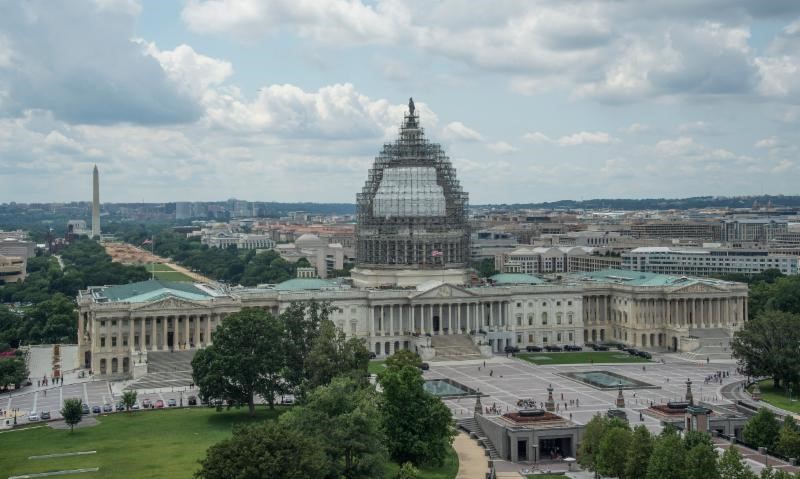
American Society of Civil Engineers-National Capital Section (ASCE-NCS) began its Centennial year with a presentation on the history and restoration of the symbol of American democracy and freedom that stands at the core of our Nation's Capital. Christine Merdon, Architect of the Capitol (AOC) Chief Operating Officer, described the roles and responsibilities of the AOC and discussed the Dome restoration project in detail. The United States Capitol Dome, a world-renowned architectural icon, was constructed of cast iron more than 150 years ago. The Dome had not undergone a complete restoration since 1959-1960, and due to age and weather became plagued by more than 1,000 cracks and deficiencies. The AOC recently began a multi-year project to repair these deficiencies, restoring the Dome to its original, inspiring splendor and ensuring it can safely serve future generations of visitors and employees as the roof of the Capitol. This project is tackling deterioration of the Dome, the interstitial space between the Dome and the Rotunda, and the Rotunda interior. The authorized budget for the project is $59.55 million, which includes construction costs, contingency, and project support. The construction contract was awarded in November 2013 when the contractor began staging equipment and materials on the Capitol grounds. Soon thereafter, the scaffolding to facilitate the restoration work began to rise from the base of the Dome to the top of the Statue of Freedom and a catenary system was installed inside the Rotunda to protect the public and invaluable artwork inside. The project is expected to provide the Capitol Dome protection from the elements for the next 50 years, preserving one of the nation's most iconic structures for generations to come.
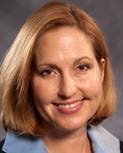 Christine joined the AOC as its Chief Operating Officer in 2010. The AOC traces its beginning to 1791 and is the builder and steward of Capitol Hill's iconic federal buildings and grounds, including the U.S. Capitol, the Library of Congress, and the Supreme Court. Ms. Merdon is responsible for facilities construction, operation, preservation, and management; she provides overall direction for 2,600 employees that work round the clock to serve Congress and the Supreme Court.
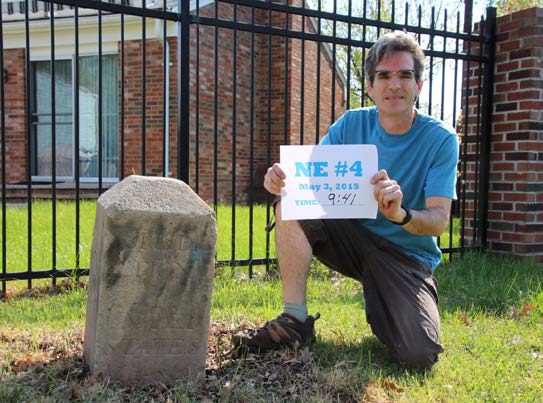
Stephen Powers, ASCE-National Capital Section (NCS) representative and the Nation’s Capital Boundary Stones Committee co-chair recounted the history of Andrew Ellicott’s original boundary lines survey and the current preservation effort for the 40 stones that continue to mark those lines today. What are boundary stones? After President George Washington chose the Potomac River region as the site for the new national capital in 1790, surveyors (most notably Andrew Ellicott) laid out 40 sandstone markers to mark the territory by placing a boundary stone every mile. The stones have four sides – facing inward towards DC (which read “Jurisdiction of the United States” and a mile number), facing outward (which show the name of the bordering state, either Maryland or Virginia), and two faces parallel to the boundary line (showing the year the stone was placed and the compass variance at that point).
The stones are the oldest federal monuments in the country and are listed on the National Register of Historic Places. Many of the forty stones remain in their original places. Due to development in the area, the stones now stand in such places as a church parking lot, a road’s median, and at the bottom of a pipe at the Blue Plains Impoundment Lot. Because of development pressures, many of the stones have been moved to locations that are more convenient – view this map of actual vs. theoretical locations. The NCS has been involved in the preservation effort since the late 1970s and revitalized interest in the stones with our biannual fence restoration projects held between 2010 and 2012. The NCS leads a. In 2014 and 2015, Daughters of the American Revolution, who originally erected the fences around the stones, renewed its boundary stone preservation efforts.
Stephen grew up in Springfield, VA, and is the son of an Army Colonel. He attended Thomas Jefferson High School, and obtained a B.S. in Civil Engineering from Virginia Institute of Technology. Stephen currently works for the Washington Metropolitan Area Transit Authority on rehabilitation projects at the nine rail yards that service Metrorail car maintenance. Stephen previously served as a member of the NCS Board of Directors and is currently co-chair of the Nation’s Capital Boundary Stones Committee. His 10 years working with the boundary stones grew from his daughter’s elementary school project on Arlington County trivia and a lifelong interest in Washington, DC history.