Dr. Z’s Corner (202011) - Fundamentals of Engineering (FE): Exam Day Experience
In this month’s article we answer many of our readers’ questions regarding the Fundamentals of Engineering (F.E) exam and what you are expected to do that day.
The Fundamentals of Engineering (FE) exam is generally your first step in the process to becoming a professional licensed engineer (P.E.). It is designed for recent graduates and students who are close to finishing an undergraduate engineering degree from an EAC/ABET-accredited program. FE exam is a computer-based test (CBT) administered by the National Council of Examiners for Engineering and Surveying (NCEES). Last year about 3700 students took the FE-Civil Engineering exam and the passing rate was about 73%.
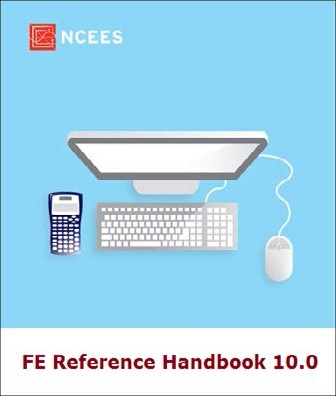
When approaching the FE Exam for the first time, it’s natural to feel a bit overwhelmed. The best way to build your confidence is to prepare for the test and familiarize yourself with the FE Ref. Handbook 10, the only official reference material for the computer-based FE exams. Review the latest version of the handbook (currently v.10) prior to exam day. Most importantly, familiarize yourself with the charts, formulas, tables, and other reference information provided. An electronic version will be available onscreen during the actual exam. Printed copies will not be allowed in the exam room.
Once your registration is approved, you will receive an email notification that you have been authorized to take the exam and are eligible to schedule your exam appointment. NCEES computer-based tests (CBT) are offered in testing windows throughout the year during the following months: January, February, April, May, July, August, October and November.
Exam Day Protocol: Step-by-Step
Once you register and know your exam date, NCEES recommends the following: First, you should plan to arrive at the testing center 30 minutes prior to your scheduled appointment. Upon arrival, a representative will provide you with a copy of NCEES-CBT exam rules for your review.
After doing so, you will be asked to provide your digital signature to confirm that you have read the rules and agreed to abide by them. You will also be asked to provide a current government issued form of ID such as a driver’s license. Once the representative confirms your identification and the exam that you are taking, you will be asked to provide a palm vein scan and have your photo taken. Your signature, palm vein scan and photo will be stored with your exam result.
Prior to being admitted into the testing room, a representative will ensure that you have in your possession only the items that NCEES allows them to the testing room. These items include your ID, an NCEES approved calculator, and eyeglasses. Most test centers have secure storage lockers on site for you to store prohibited items such as cell phones, other electronic devices and personal belongings such as a watch, wallet, or bag.
Once you complete the check in process, you then report to an exam proctor who will ask you to confirm your ID by providing again your palm vein scan. The proctor will then give you a reusable booklet and marker for scratch work. The proctor will review the exam rules and will escort you to the exam room and assigned workstation and launches the exam. Before starting your exam, all examinees will be required to read and agree to the NCEES’ non-disclosure agreement and complete a brief tutorial to learn how to ADVANCE to the next item, RETURN to a previous item and FLAG items for review.
The FE exam includes 110-questions. The exam appointment time is 6 hours long. Nondisclosure agreement (2 minutes); Tutorial (8 minutes); Actual exam (5 hours and 20 minutes) and scheduled break (25 minutes).
After completing approximately 55 questions, examinees will be prompted on screen with the option to take a 25-minute break. Examinees who wish to take the scheduled break should raise their hands and wait for the proctor for assistance. Unscheduled breaks may be requested at any time during the exam by following the same procedure. However, examinees should be aware that the clock will not stop during an unscheduled break. Examinees are allowed to access their lockers during the scheduled and unscheduled breaks.
After completing the exam and a brief survey, you should raise your hand and the proctor will verify that you have properly exited the exam, will escort you from the testing room, and collect your booklet and marker. You will receive an email from NCEES within 7 to 10 days notifying you that your results are available for viewing in your MYNCEES account.
And lastly, stay relaxed and confident. Always keep a good attitude and remind yourself that you are going to do your best!
Until next time,
Ahmet Zeytinci (Dr.Z.)
Dr. Z’s Corner (202101) - The Amazing True Story of a Former Student and Fresh PE: “Finally, a Sense of Accomplishment”
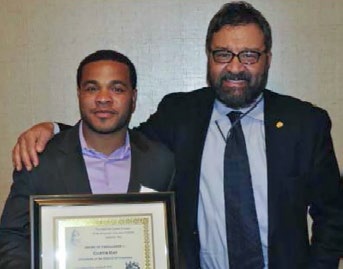
The new year is just around the corner and for my January 2021 article I’ve decided to share an inspirational story of a former student and a real Washingtonian, Curtis Day, a fresh Professional Engineer:
“I remember my high school graduation day as if it was yesterday. I recall how everyone seemed so happy, excited, and had a sense of completion. In contrast, I found myself locked in deep thought, unable to enjoy the moment, as I contemplated what was next. My perspective was a sense of urgency. For me things were just getting started, and I realized that I did not have a solid plan for my future.
College was such an unknown to me at the time, and I didn’t see the benefit of attending college. The men in my family were all self-employed or entrepreneurs, I was taught to learn a trade and be independent. I went to work for my father after high school, learning the HVAC trade and obtaining my Commercial Drivers License.
I worked as an HVAC technician and heating oil delivery driver until I was 27 years old. Working in the family business has its challenges and my mom kept encouraging me to just enroll in a class. She told me to just try it out for one semester, what did I have to lose? Then I started the process of enrolling for the Spring 2011 semester at The University of the District of Columbia. The choice to attend UDC was very simple, Washington, DC has several local universities, however UDC was the only one who had affordable tuition in the area. I started the process of enrolling myself, but I had no idea what was in store for me. First, locating high school transcripts after being out of school for nearly 10 years is not easy. Second, I never failed any class in high school, but since I never had any aspirations of going to college I skated by and did just enough to pass and get out.
I remember the day I took my application and transcript to the enrollment office. My son was 2 years old at the time and he was with me, I went into the office, handed over my papers, and sat down. The person in charge at the desk proceeded to calculate my GPA and informed me that I didn’t meet the minimum requirements for entry into the University and that I would have to start at community college.
I never forgot how my feelings were hurt and I felt a sense of rejection. My first thought was to go back to what was working for me and give up this whole college dream. I felt totally discouraged, but after talking to my mother she convinced me to continue with the process. I ended up taking a placement test later that week, and after I finished, I was called into the office. I wasn’t sure what was going on, but I found out that I had scored pretty high on the placement test. I told the advisor that it was recommended that I start in Community College and she printed out my test scores and gave me instructions to return back to the University. I had scored high enough to enter the University after all.
I remember my first semester at college. I particularly remember Calculus class because I was so unsure of how I would perform. I had always been pretty good at math, but Calculus was always tough. I still have the first exam I took in my calculus class, I received and A and it has always been my reminder that I belong.
I remember meeting Dr. Z and Dr. Behera. They stressed the importance of the FE Exam and the PE Exam, what seemed like everyday. They both guided me through my college experience making sure I not only learned the material, but that I was prepared to enter the workforce. I remember my college graduation day, once again the same atmosphere of jubilee and relief surrounded me. Even though I had completed my studies with the honor of Summa Cum Laude, I felt a sense of urgency, even more so than on my high school graduation day.
I had spent the previous 4.5 years on a path to change my career and now it was show time. I remember getting my FE Exam results shortly after graduation, but still not relief. I had a sense of anxiety to get into industry and prove that I belonged. At the time I had three job offers, and I chose to join the Boeing Company in Everett, Washington. At the time I worked with the team responsible for the design of the Cargo System on the 777-9 Commercial Airplane. After working in the aerospace industry for 2 years, I realized that I was not working in the field of engineering that I loved. I decided to resign and move back to DC and pursue a lifelong career as a Civil Engineer in the Water Resource discipline.
I am now employed with an engineering firm in the D.C. metro area, working with a team on land development projects. I am responsible for Stormwater Management/Storm Drain Design, Water and Sewer Main Design, Erosion Sediment Control Design, Flood Plain Mapping, and various other tasks related to land development.
I was first scheduled to take my PE exam in April 2020, but due to Covid-19 it was cancelled. I eventually ended up taking the exam in October 2020, and I am pleased to announce to the world that I received a passing score on my first attempt. I am also pleased to announce that I finally felt a sense of accomplishment. I feel like passing the PE exam and obtaining my PE License, will be something that I will remember forever and will be a major stepping stone for myself and my family.
I hope to be an inspiration to others and be an example of why it is never too late to do anything in life.
Pursue your dreams, never give up, work until you feel a sense of accomplishment, enjoy it for a moment, and keep building. Curtis Day, PE .”
Wishing all of you health, wealth, and happiness in 2021.
Until next time,
Ahmet Zeytinci (Dr.Z.)
Dr. Z’s Corner (202102) - Importance of Setting SMART Goals: A Goal Without a Plan is Just a Wish
Few stories are as widely read and as universally cherished by children and adults alike as The Little Prince (Le Petite Prince). It was written by Antoine de Saint-Exupéry in 1943. It captured the hearts of readers around the world, sold about 140 million copies and continues to sell over two million copies every year:
One of the lessons from this novella comes from the famous quote “A Goal Without a Plan is Just a Wish.” In the late 1960s, Locke and Latham’s pioneering research into goal setting and motivation gave us our modern understanding of goal setting. This month we would like to talk about setting goals.
An effective way to make goals more powerful is to use the mnemonic SMART. This acronym stands for Specific, Measurable, Achievable, Realistic, and Timely. Therefore, a SMART goal incorporates all these criteria to help focus your efforts and increase the chances of achieving your goal. Let us briefly focus on each component:
Specific: Answers the who, what, where and when of the goal. Compiling all these details allows you to see what is really required to achieve your goals. One of the questions to ask includes: What is the end result? For the civil engineering students for example, the end result seems quite clear: to conquer the FE exam while students are in school and passing the PE exam within five years after graduation while working under the supervision of a licensed professional engineer.
Measurable: In setting measurements, you are creating milestones within your SMART goal to track progress. For example, before you attempt to analyze and design a complex indeterminate structure, first you have to fully understand the analysis and design of simple determinate structures. Here, the questions to ask are: How will you determine success? What numbers can you track along the way? How will you know when you have achieved your goal?
Achievable/Attainable: Always consider if your goal is realistic or just a dream. A good goal will make you stretch, but it should not be out of reach. If the thought of trying to lose forty pounds is overwhelming, start with a goal of losing five or ten. Some important questions: Do you believe you can do this? Is this goal really achievable? For our civil engineering students, passing the FE and PE exams is quite possible and many students accomplished that goal on their first attempts.
Relevant/Realistic: Consider whether this is worth your time. This helps you determine which path to focus on and where to spend your time. Some methods interpret the “R” as realistic: Is this goal worth your time and effort? Is it a win-win goal? Is it a priority? For our civil engineering students, the answer is absolutely yes. Conquering the FE and PE exams builds your confidence, makes you feel proud of yourself, and is relevant to career prospects.
Timely/Time-bound: Every goal must have a timeline and a deadline. Items with deadlines take priority. Items without deadlines get lost in the shuffle. What is the target date or due date? Are there milestones along the way with their own due dates? Do you need weekly, monthly, or quarterly goals to be achieved?
All successful people in all fields set goals. Setting goals give students long-term vision and short-term motivation. It helps them to organize their time and their resources so that they can make the most of their life. Goal setting is fundamental to long-term success as well. After all, it’s difficult to get to a desired destination before you have clearly defined where that destination is. Goals help students to focus upon the journey to a collection set of achievements, meaning they allocate their resources and time more efficiently and can access motivation during times when they may feel like giving up.
Writing your Goals is Important: Writing a specific goal into a calendar or journal gives engineering students something to work and plan toward. When written down, these goals form an external representation of inner desires to pass the exams. Written goals are a constant reminder of what a student wants to accomplish. Goal setting even fuels ambition and confidence by encouraging determination through difficult periods and offering a sense of pride when success finally arrives.
Setting Goals Break Down Mountains: Most young adults have big dreams that can seem impossible to accomplish at first. It is easy for students to feel discouraged when they are staring at a future that seems too large to achieve. However, proper goal setting can break those larger, more intimidating aspirations down into achievable stepping stones. Not only does planning toward smaller goals make it easier to formulate a plan of how one achievement can lead to another, but research suggests that achieving smaller milestones offers greater levels of motivation.
Setting a Goal Obligates to Take an Action: Setting a goal obligates an individual to take action, regardless of the obstacles that may be in place. As such, it can encourage students to develop critical thinking skills, new problem-solving techniques, and a better understanding of how to overcome challenges. The accountability of goal setting encourages students to look back over their previous successes and failures, evaluating areas they need to improve. As such, it pushes them to tackle challenges head on and work on their weaknesses in order to produce better chances of overall success. It can also help engineering students to realize techniques that may not be working for them so they can seek out alternative routes to achievement.
Goals Make Students Want to Be Better: There are numerous experimental and correlational studies showing that setting goals increases success rates in almost every setting, including education. Part of the reason for this is that setting goals pushes young adults to articulate the things they want out of life, so they live more consciously. Without goals, students subject themselves to a default or natural set of actions that are there to keep them feeling safe and comfortable, without offering any opportunity for growth. With goals, students can discover more about themselves and work towards becoming the best versions of themselves. In other words, goals allow engineering students to tap into their inner potential by giving them targets to strive toward.
Goals Prepare Students for Professional Life: Through goal setting, students discover a level of respect for the dedication and determination required to achieve further important goals in life. Not only is goal setting important for helping students get more out of their academic experiences, but it also means that they will continue to use the same skills in the future to apply for a high-paying job or achieve a new promotion. Furthermore, setting goals gives engineering students an important tool to measure their progress through life by using their leadership skills, critical thinking, and determination.
We would like to thank the Army and Navy Academy for the permission to use some of their resources: (https://armyandnavyacademy.org).
Until next time,
Ahmet Zeytinci (Dr.Z.)
Dr. Z’s Corner (202104) - It’s the Economy Again, Stupid!

The phrase, ‘It’s the economy, stupid’ has been attributed to James Carville, Bill Clinton’s successful 1992 presidential campaign strategist. And indeed, it is. The economy is both blessing and curse. It creates both well-being and disaster. If we ever needed a reminder of the omnipresent impact our daily economic activities have on our lives, the global COVID-19 pandemic is just such a reminder. So, what then, is the economy?
Economic theory distinguishes between three sets of activity: production, resource allocation, and consumption. These distinct sets of economic activity can also be described as the ‘what’, ‘how’ and ‘for whom’ questions of economics. The first describes production activity and its many interesting issues related to the production of goods and services including production costs, efficiency, innovation, and competition. The second describes the recipe of production, and includes such interesting topics as labor inputs, energy, and renewable vs nonrenewable resources. The third describes the demand portion of the economy including what kind of products and services consumers need or want, and how responsive they might be to price changes.
This past year has highlighted all three of these economic spheres. For example, what goods and services do we produce in the United States and where do we produce them? Which ones do we import and how reliable are the supply chains of these imports? Take our food, for example. Eighty percent of our fruits and vegetables are produced in California where water is increasingly scarce. Most of our meat comes from Texas. Both are a far distance from the distribution centers in high population areas on the east coast. Much of our food is also imported and what is produced domestically requires the labor input of migrant workers who come to the US from Mexico and other central American countries. Without them, our strawberries, salad greens, and beans would not get harvested and would rot in the fields. We learned firsthand how vulnerable some of our supply chains are as workers in meatpacking plants and distribution centers became known as the essential workforce we depend on to get our food delivered to local grocery stores or to our doorsteps. These essential workers are some of the lowest paid and their working conditions make them highly vulnerable to COVID-19 transmission.
Nature too suffers the consequences of a highly centralized food system characterized by long supply chains. Eleven percent of US greenhouse gas emissions are associated with the food system. Globally, agriculture is responsible for 25 percent of all CO2, 65 percent of methane, and 90 percent of nitrous oxide emissions and uses 70 percent of our freshwater. The positive impact of reduced travel was also noticeable during the pandemic as greenhouse gas emissions markedly declined.
Consumer demand shifted as well. Demand for home improvement related goods and services sored while tourism, hospitality and other customer facing service sectors suffered. The increasing bifurcation of our demand sector also came into stark focus as some households depend on food from local food banks and are forced to live in shelters or their cars, while others were able to bolster their savings. Women left the workforce in especially high numbers in part because they occupy a high portion of service sector jobs, and in part because they took over the bulk of home schooling and other child rearing responsibilities. Labor demands in and outside of the formal workforce are not evenly distributed.
So, what have we learned? My hope is that we were reminded of what economists call negative externalities. These are the unintended and usually negative side effects of our economic activity. These side effects show themselves in the pollution of our air, rivers, and soil, plastic islands and chemicals in our oceans, global climate change, growing inequalities, and social unrest. Negative externalities don’t just disappear. They are displaced over time and space. Their consequences are rarely suffered by those who create them, but by future generations and those least able to defend themselves.
My hope is that we will begin new collaborations. Economists from Malthus (1766–1834) to the Club of Rome (1968) have warned of this disastrous prospect of resource depletion and a rate of population growth that outpaces our rate of productivity growth and especially our ability to increase food production. Yet even as we face the prospect of a world population of ten billion people, we have reason for optimism. Technology and its efficiency increases has enabled us to produce more oil, more food, and more consumer goods. In fact, we have produced so much more that prices have fallen, and demand grows steadily. Yet new collaborations are needed to address the real frontiers of technology and efficiency.
The true limit to growth may not lie on the resource side of the economic process, but on the sink side. Sinks are the earth’s genius ways to absorb the emissions and waste by-products of our economic activity. As waste and emissions are released, they are processed, absorbed, buffered, and accumulated in a set of context systems we call our environment. Oceans absorb CO2, soils absorb water and the emissions it contains, the air takes up and dissipates NOx and SOx emissions. And there are social sinks as well as workers are loved and cared for in families and communities who absorb the stress and strain of their exhaustion and injuries.
This means that the field of economics, and the field of engineering, must be concerned with more than the resources necessary to sustain economic production and consumption. We must also concern ourselves with the sink capacities that provide the capacity to reduce the negative impacts created by growing emissions and waste. Can emissions not only be reduced but reversed? Can waste be reused with minimal energy inputs? Can buffer capacities of the soil be restored? Can we not only reduce CO2 emissions, but reabsorb excess CO2 without creating new unwanted side effects?
In other words, we need a new concept of economic activity that shifts our focus from sources to sinks and the value these sink functions create. Such a sustainable economy will increase efficiency so fewer inputs can result in the same or higher output levels of goods and services; it will reduce emissions and waste resulting from the production and consumption of these goods and services; and it will restore and improve the ecosystems services that deliver the sink capacities necessary to process emissions and waste and maintain the health and vitality of our physical and social environment. Such a new economy will certainly require circular designs and systems approaches.
Food is a good place to start. At the University of the District of Columbia and its College of Agriculture, Urban Sustainability and Environmental Sciences (CAUSES) we launched an Urban Food Hubs model that creates small scale circular food systems consisting of (1) food production, (2) food preparation, (3) food distribution, and (4) closing the loop through waste and water management. The urban food hubs are ideally located in neighborhoods that lack access to fresh food. They model a circular, decentralized food system that can supplement rural production with greens, tomatoes, peppers and ethnic crops so that the most perishable and nutrient rich food plants can be produced right where the majority of consumers live. I invite you to join in this journey of re-envisioning such a circular, decentralized economy that understands how nature works, and how people live well – one community and one product at a time. It’s the smart economy of the future!
About the Author
Sabine O’Hara, is Distinguished Professor and Program Director of the PhD in Urban Leadership and Entrepreneurship in the College of Agriculture, Urban Sustainability and Environmental Sciences (CAUSES) at the University of the District of Columbia (UDC). As founding dean of CAUSES she led UDC’s efforts in building a cutting edge model for urban agriculture that improves urban sustainability and the quality of life of urban communities.
Dr. Z’s Corner (202105) - Civil Engineering & Artificial Intelligence (AI) Applications from Netherlands


This special issue of Dr. Z’s Corner will be the last before we break for the summer. This month I’ve decided to surprise our readers and invited two well-known engineers and scholars from Europe. My guest authors, Dr. Eleni Smyrou and Dr. İhsan Engin Bal, work together as a husband and wife team and currently both are faculty at Hanze University of Applied Sciences Groningen, Netherlands. I hope you will enjoy their interesting article.
Introduction
Technology is evolving at an unprecedented speed, by transforming the society, politics, governance, and professions. Civil engineering is no exception.
Computers significantly changed the way structures are engineered. The method of Hardy Cross from the University of Illinois UrbanaChampaign, for example, was revolutionary in the 30s, enabling structural engineers to design and build taller structures until the 60s. Similarly, the elastic design spectrum, proposed by Nathan Newmark who is another professor at Urbana-Champaign, revolutionized the seismic design of structures starting from the 50s. The implementation of computerized methods in civil engineering, however, was a total game changer. Now 90 years after the first publication of the Cross Method, and more than 60 years after the proposal of the Newmark Spectrum, our structural design problems are more complex than ever.
Although the civil engineering discipline adapted well to the early changes of computerization, the adoption of emerging technologies in the new millennium is slow. The use of brute-force when using computers to analyze and design larger, taller and more complex structures has become the main exploitation area of technology in civil engineering. Furthermore, structures have become much more complex in the last few decades, requiring interface with other disciplines via technologies such as BIM (Building Information Modeling), which is another technological development that found a place in practice. Apart from those, and despite the extensive research, other emerging technologies did not actually revolutionize the design and construction processes, yet; though this may change in the coming years.
Things are changing recently, although slow and limited. Some new technology applications in civil engineering are evident in the last few years. The momentum in new technologies spreading through our daily routines, and the increasing societal and economic demands, are forcing the civil engineering discipline to adapt.
In this article, we discuss one of the major emerging technologies, “Artificial Intelligence”, the magic word of the recent years.
What is AI?
Artificial Intelligence (AI) is a broader term that covers all sorts of applications where the intelligence is developed by a machine. Although the concept dates back to the 40s, everyday applications were only possible when the available computational power was enough to deploy large datasets for training models. This happened in the last several years, thanks to the use of GPU (Graphics Processing Unit), which was a major breakthrough for the realization of real-life AI.
The computers consist of CPU (Central Processor Unit) and GPU among other components. The processes are usually done by CPU and thus the computational power of your computer will heavily depend on the power of your CPU. GPU, however, is attached to the graphical unit of the computer and is used only for graphically demanding applications, such as playing videos, rendering 3D models, or playing games. Over the years the GPUs have become stronger and stronger, creating a sort of hidden power inside every computer, but used only for graphical purposes. It was not until a few years ago that it was discovered that the GPUs can be extremely useful for training AI models because they can run multiple training processes in parallel, something which can speed up the AI training significantly.
Today AI is almost everywhere. Entertainment platforms on the internet, for example, provide song, movie or series recommendations based on AI technology. The more time you spend on such platforms, the more data the AI algorithm will collect, get better trained and, in a way, get better acquainted to you. It will eventually provide you better and better recommendations. After a while these platforms become like a good friend who know your taste very well. That is the machine intelligence we are talking about.
Can AI Detect Structural Problems?
The same concept as entertainment platforms applies in almost all fields. In civil engineering for example, AI is already used in several areas. One of the most successful applications is detecting structural problems, anomalies, damage and deterioration based on photographs. Similarly to the entertainment platforms, the more data which is provided, the more accurate the model and the predictions become. Such AI-powered tools are more suitable for existing structures at the moment, thanks to the abundance of data for training models. Even if not, it is easier to collect data from existing structures rather than the new structures that are not even built yet. That is why many engineering firms are digging out their photographic databases to see if they can throw these photos into a smart AI model and replace the laborious engineering work of damage detection with computer codes.
In recent work1 with our colleagues from Hanze University of Applied Sciences in Groningen (Netherlands) and University of Leeds (UK), we showed that a simple photograph would be enough to detect a crack on a masonry brick surface. Earlier methods were able to only place the crack in a bounding box, telling us simply “there is a crack somewhere inside this box”. Our method detects the cracks pixel-wise, telling us the exact location, length, spread and width of the crack in a photograph. This was not achieved in masonry surfaces before, although AI-based crack detection is more advanced in concrete and asphalt surfaces, which are rather homogenous. Our work brings new opportunities such as regular scanning of historical buildings or old masonry structures based on simple photographs, an opportunity that will significantly reduce costs and time, and allow access to many more structures. What is superior in this method is that, even photographs taken by citizens and non-technical people can be used for extracting engineering information in a fully automatic fashion.
We support the crack detection technology with other emerging technologies, such as 3D scene reconstruction and near-infrared (NIR) crack width estimation, among others. The former is a method that can build a 3D computer model if enough photos are taken from a real structure, while the latter is a method where we developed invisible markers that reflect light only if special NIR cameras are used. Both of these technologies allow us to train a building responsible person or a citizen for taking suitable photographs for engineering purposes. Photographs can be taken regularly or after an event, such as earthquakes or deep excavations. We are already testing the combination of these technologies in a project funded by the Cultural Heritage Agency of the Netherlands (RCE).
AI is a promising concept and will certainly find further application areas in civil engineering, helping engineers make critical decisions for complex problems.
About the Authors:
Dr. Eleni Smyrou and Dr. İhsan Engin Bal work at Hanze University of Applied Sciences Groningen, Netherlands, in the Earthquake Resistant Structures research group. They both have degrees in civil engineering, as well as M.Sc. and Ph.D. degrees in earthquake engineering. Their work areas are seismic design, assessment, monitoring and strengthening of structures. Use of new technologies for structural safety has been a major research agenda topic for them for the last couple of years. They are also co-founders of “Senso Engineering – Vibration Solutions” and “Strintel – Structural Intelligence”, two startups which are providing services on the use of new technologies for structural safety.
1 https://www.sciencedirect.com/science/article/pii/S0926580521000571
(this is an open access article which is freely downloadable)
- Dr. Z’s Corner (202110) - Bitcoin and Currently More than 12,000 Cryptocurrencies: A Hope or a Threat?
- Dr. Z’s Corner (202111) - Risk Irrationality: How COVID-19 Changed the World and How Enterprise Risk Management Deflates Conspiracy and Irrationality the First Time
- Dr. Z’s Corner (202201) - The Evolution of Engineering Ethics: ASCE’s Code of Ethics
- Dr. Z’s Corner (202202) - Best Advice from Dr. Z. to Engineering Students: Take the F.E. Exam While You’re Still in College