Dr. Z’s Corner (201604) - Let's Talk about Engineering Ethics: NCEES Rules of Professional Conduct - Part I

Starting with this issue, we will talk about “Engineering Ethics.” Most of you know that ethics is a recent introduction to the FE exams and some may ask why NCEES has decided to include ethics in the exams. The answer is simple: there have been a number of so called “engineering disasters” like Tacoma Narrows Bridge failure (1940), Hyatt Regency Hotel Walkway collapse (1981), Chernobyl disaster (1986) and Space Shuttle Columbia disaster (2003) to name a few and these unfortunate events have increased the public awareness about the importance of engineering in the society.
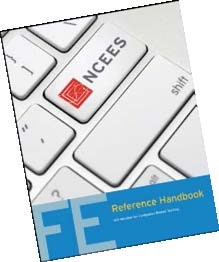
The ethical principles governing the engineering profession are embodied in codes of ethics and have been adopted by state boards of registration and professional engineering societies such as ASCE, ASME, IEEE, and NSPE. The Rules of Professional Conduct is also included in NCEES Reference Handbook. According to NCEES, the expertise possessed by engineers is vitally important to societal welfare. In order to serve society effectively, engineers must maintain a high level of technical competence. However, a high level of technical expertise without adherence to ethical guidelines is as much a threat to public welfare as is professional incompetence.
As engineers, we are expected to exhibit the highest standards of honesty and integrity. Engineering has a direct and vital impact on the quality of life for all people. Accordingly, the services provided by engineers require honesty, impartiality, fairness, and equity, and must be dedicated to the protection of the public health, safety, and welfare. Engineers must perform under a standard of professional behavior that requires adherence to the highest principles of ethical conduct.
An example of one such code is the NCEES Rules of Professional Conduct, Section 240 of the Model Rules. In practice, an engineer is responsible for knowing and abiding by these Model Rules as part of her/his responsibility to the public. The Model Rules consist of the following three major sections:
I. Licensee’s Obligation to the Public,
II. Licensee’s Obligation to Employers and Clients, and
III. Licensee’s Obligation to Other Licensees.
According to the NCEES, the three principles listed above are important guidelines for professional engineers. In many situations, the application of these codes of ethics is straightforward. However, there may be situations in which applying the code may raise issues that are more difficult. Due to the space limitations, today we will discuss the first item only and we will continue in next two issues:
I. Licensee’s Obligation to the Public
1. Licensees shall be cognizant that their first and foremost responsibility is to safeguard the health, safety, and welfare of the public when performing services for clients and employers.
2. Licensees shall sign and seal only those plans, surveys, and other documents that conform to accepted engineering and surveying standards and that safeguard the health, safety, and welfare of the public.
3. Licensees shall notify their employer or client and such other authority as may be appropriate when their professional judgment is overruled under circumstances in which the health, safety, or welfare of the public is endangered.
4. Licensees shall, to the best of their knowledge, include all relevant and pertinent information in an objective and truthful manner within all professional documents, statements, and testimony.
5. Licensees shall express a professional opinion publicly only when it is founded upon an adequate knowledge of the facts and a competent evaluation of the subject matter.
6. Licensees shall issue no statements, criticisms, or arguments on engineering and surveying matters that are inspired or paid for by interested parties, unless they explicitly identify the interested parties on whose behalf they are speaking and reveal any interest they have in the matters.
7. Licensees shall not partner, practice, or offer to practice with any person or firm that they know is engaged in fraudulent or dishonest business or professional practices.
8. Licensees who have knowledge or reason to believe that any person or firm has violated any rules or laws applying to the practice of engineering or surveying shall report it to the board, may report it to appropriate legal authorities, and shall cooperate with the board and those authorities as may be requested.
9. Licensees shall not knowingly provide false or incomplete information regarding an applicant in obtaining licensure.
10. Licensees shall comply with the licensing laws and rules governing their professional practice in each of the jurisdictions in which they practice.
As always, we conclude our remarks with important reminder: in both the FE and PE exams, timing and knowledge of the topics listed in the NCEES – Reference Handbook is everything. To conquer these exams, speed is crucial, speed can only be attained through practice, and more practice (visit this month’s problem set). Please remember to send us your feedback about this column and our pro-bono Saturday classes.
Until next time,
Ahmet Zeytinci, PE
Dr. Z’s Corner (201605) - Let’s Talk about Engineering Ethics: NCEES Rules of Professional Conduct – Part-II
Did you know that the 31st president of the United States was a Professional Engineer? He enrolled at Stanford University when it opened its doors in 1891 and graduated as a mining engineer. His term (1929–1933) was marked by the stock market crash of 1929 and the beginning of the Great Depression.
This great engineer once said: The great liability of the engineer, compared to men of other professions, is that his works are out in the open where all can see them. He cannot, like the doctors, bury his mistakes in the grave. He cannot, like the lawyers, argue them into thin air. He cannot, like the architects, cover his failures with trees and vines. He cannot, like the politicians, screen his shortcomings by blaming his opponents. The “engineer” simply cannot deny he did it; if his works do not work, he is damned! Herbert Hoover
In last month’s article, we started discussing the Model Rules, the important guidelines for professional engineers. As you may remember, these rules were comprised of the following three major sections: (A) Licensee’s Obligation to the Public, (B) Licensee’s Obligation to Employers and Clients, and (C) Licensee’s Obligation to Other Licensees. And we covered the first model rule. Today we will talk about the second and third.
II. Licensee’s Obligation to Employer and Clients
1. Licensees shall undertake assignments only when qualified by education or experience in the specific technical fields of engineering or surveying involved.
2. Licensees shall not affix their signatures or seals to any plans or documents dealing with subject matter in which they lack competence, nor to any such plan or document not prepared under their responsible charge.
3. Licensees may accept assignments and assume responsibility for coordination of an entire project, provided that each technical segment is signed and sealed by the licensee responsible for preparation of that technical segment.
4. Licensees shall not reveal facts, data, or information obtained in a professional capacity without the prior consent of the client, employer, or public body on which they serve except as authorized or required by law or rules.
5. Licensees shall not solicit or accept gratuities, directly or indirectly, from contractors, their agents, or other parties in connection with work for employers or clients.
6. Licensees shall disclose to their employers or clients all known or potential conflicts of interest or other circumstances that could influence or appear to influence their judgment or the quality of their professional service or engagement.
7. Licensees shall not accept compensation, financial or otherwise, from more than one party for services pertaining to the same project, unless the circumstances are fully disclosed and agreed to in writing by all interested parties.
8. Licensees shall not solicit or accept a professional contract from a governmental body on which a principal or officer of their organization serves as a member. Conversely, licensees serving as members, advisors, or employees of a government body or department, who are the principals or employees of a private concern, shall not participate in decisions with respect to professional services offered or provided by said concern to the governmental body that they serve.
9. Licensees shall not use confidential information received in the course of their assignments as a means of making personal profit without the consent of the party from whom the information was obtained.
III. Licensee’s Obligation to Other Licensees
1. Licensees shall not falsify or permit misrepresentation of their or their associates’, academic or professional qualifications. They shall not misrepresent or exaggerate neither their degree of responsibility in prior assignments nor the complexity of said assignments. Presentations incidental to the solicitation of employment or business shall not misrepresent pertinent facts concerning employers, employees, associates, joint ventures, or past accomplishments.
2. Licensees shall not offer, give, solicit, or receive, either directly or indirectly, any commission, or gift, or other valuable consideration in order to secure work, and shall not make any political contribution with the intent to influence the award of a contract by public authority.
3. Licensees shall not injure or attempt to injure, maliciously or falsely, directly or indirectly, the professional reputation, prospects, practice, or employment of other licensees, nor indiscriminately criticize other licensees’ work.
4. Licensees shall make a reasonable effort to inform another licensee whose work is believed to contain a material discrepancy, error, or omission that may impact the health, safety, or welfare of the public, unless such reporting is legally prohibited.
As always we conclude our remarks with another important reminder. Keep in mind that many problems in the FE and PE exams can be solved by either analyzing the answers or reverse engineering (visit this month’s problem set). Read the options very carefully.
Good Luck,
Ahmet Zeytinci, P.E.
Dr. Z’s Corner (201609) - Time Really Flies – Especially When You Are Having Fun
Unbelievably AY-2016–2017 has just started. Time goes by so fast. Some of you may know I am just back from my semester-long sabbatical leave. For the last thirty years in academia, thanks to my students’ resistance, I had never dared considering a leave until this past semester. As a tenured professor, I was told, I was eligible to take paid sabbatical leave at least four times in three decades, but no regrets.
Here is a brief account of my break. During my break, while charging my batteries, I never missed my monthly NCS articles of Dr. Z’s Corner. I also continued preparing dozens of original problems for our readers every month. Not only that, I was also at school almost every Saturday to make sure I run our now well-known pro-bono Saturday classes for the students from various universities and also practicing engineers in the metro area. I was really having fun since we have helped scores of engineering students and engineers for free. And one of them was Diego Buitrago, a structural engineer from Washington, DC. His story was truly inspirational:
Dear Dr. Z,
I just received the great news. Yes, I conquered the Fundamentals of Engineering (FE) engineering exam on my first try. As a fresh graduate, I would like to thank you for your continued support and mentorship. I also would like to thank to NCS for the “Dr.Z’s Corner” for providing hundreds of problems for free for the students and engineers who are preparing to take their FE and PE exams. Your pedagogy, your examples and your pro-bono Saturday sessions made a huge difference and believe it or not you have changed my life Dr. Z.
For other students who are interested in passing these exams, I have to tell them my story, how I met you and how I joined your exciting free Saturday classes at UDC? First, let me start from the beginning:
I came to U.S. from Colombia in August 2013 and I had set three important goals for myself. To work hard and be a great Structural Engineer, finish the master’s degree, pass the FE and PE exams and hopefully be my own boss one day.
You may not remember but in spring 2014, I had the opportunity to meet with you, Dr. Z at Howard University. You were a guest speaker at our research seminar that I attended. You gave to us an unforgettable presentation about “How to inspire, motivate and educate engineering students and how to conquer the FE and PE exams?” You also shared with us some stories of your personal life. I was especially impressed with your first two weeks in this country and your experience with homeless people on the streets of Washington, DC. At that point, for sure you were my hero and my role model. For the first time since I came to the U.S. I felt identify with a person that I could see as a very positive influence on me. By that time, I thought I had difficulties but that was nothing compared to your experience. No doubt, this gave me hope and inspiration to be successful in my career as a structural engineer.
At the end of summer 2015, my master’s degree requirements were partially completed and I joined your pro-bono Saturday classes that you have been offering at UDC. During the first three months, I studied and prepared for the FE exam based on the information and class notes from you. I followed your every advice to conquer the FE exam and I literally solved all the exercises available at Dr Z’s Corner given in the NCS’ website. I want all other students to know that ASCE-NCS website is a great source with hundreds of original problems and costs nothing, it is absolutely free.
Immediately after passing the FE exam, I also received a job offer from a world renowned structural engineering company in San Francisco, California.
I consider myself very fortunate that I met you at the right time Dr. Z. You have already changed my life. I cannot thank you enough, I am eternally grateful.
Sincerely,
Diego Buitrago, E.I.T
T. Y. Lin International
Bridge Engineer
Finally, did you know that NCEES Reference Handbook (Version 9.4) is just published? Next month we will talk about that exciting news and its implications.
I will close with a reminder: In both FE and PE exams timing is everything. To conquer these exams SPEED is crucial, and speed can only be attained through practice and more practice (try out this month’s problems)!
Until next time,
Ahmet Zeytinci, P.E. (Dr. Z)
Dr. Z’s Corner (201610) - Why Do You Need a PE License?
Quite often we get questions from our readers about the importance of the PE license. For engineers, the PE license is the mark of a professional. It’s a standard recognized by all employers and their clients, by governments and by the public as an assurance of dedication, skill and quality.
For consulting engineers and private practitioners, licensure is a virtual necessity. In fact, it is a legal requirement for those who are in responsible charge of work, be they principals or employees. The PE license is also very important for other institutions. For example, government agencies, educational institutions and private industries are increasingly requiring that they hire and contract only with licensed professional engineers. This is a trend that is almost certain to continue in the future.
According to the National Society of Professional Engineers, an engineer needs a license for various reasons including prestige, career development, authority, flexibility, and of course money:
Prestige: PEs are respected by the public and are seen in the same light as licensed professionals in other fields. PEs are also held in high esteem by their peers within the engineering community, who see the PE as part of an elite group.
Career Development: Employers are impressed with engineers who have their PE license. Licensure not only enhances your stature, it shows commitment to the profession and demonstrates heightened leadership and management skills. Licensure is also a necessity for rising to increased levels of authority and responsibility.
Authority: Only PEs can sign and seal engineering drawings; and only PEs can be in responsible charge of a firm in private practice or serve as a fully qualified expert witness. Also, many government agencies and educational institutions are emphasizing licensure among their engineers as well.
Flexibility: Having a PE license opens up your career options. You can become a specialist, or establish your own business. It also protects you during industry downsizing or outsourcing. The PE license allows you to go as far as your initiative and talent will take you.
Money: Studies have shown that most PEs earn higher pay throughout their business careers. Having your PE allows expanded opportunities beyond a company structure – as an independent consultant for example.
The Latest NCEES-FE Reference Handbook (Version 9.4)
Last month we promised our readers to talk about the latest FE Reference Handbook (Version 9.4) that is available from The National Council of Examiners for Engineering and Surveying (NCEES).
As before, the new FE Reference Handbook (version 9.4) is supplied electronically to FE examinees during the exam and displayed on their exam computer monitors as a searchable PDF file. All examinees will use a 24-inch monitor while testing to allow sufficient space to display both the exam question and the reference handbook. It is very important to become familiar with the latest version of the FE Reference Handbook prior to taking the computer-based test (CBT). I also recommend my students to own a hard copy of the handbook. When studying, remembering the page numbers of some important formulas may also help.
To pass the exam, you need to get about 77 questions right or 70% of the whole test. To achieve that, you have to get to the proper formulas, relationships and tables as fast as you can without wasting time. For example, just to give you an idea, if you need the Modulus of Elasticity of Aluminum (Ealum) for a problem on the test, the answer will be on page 84 of the reference manual and you have to go to that page in less than ten seconds. If you need the dimensions and properties of W-Shapes you need to turn to page 159. I’ll never forget when, during one of my pro-bono Saturday classes at the University of the District of Columbia in Washington, DC, we needed the properties of a W 12 x 50 shape and a student in the class spent more than five minutes to get to the right page instead of a few seconds.
Finally, the FE is a fast-paced exam and you will have little time to look up information. Therefore, make sure you are familiar with your reference material and you always begin with the subject areas you know best. This will give you more time and build your confidence. Remember, it is always a good idea to consider reverse engineering the problems by substituting the answers and seeing which one works (try your hand at this month’s practice problems!).
Most importantly, stay relaxed and confident. Always keep a good attitude and remind yourself that you are going to do your best. Good luck!
Until next time,
Ahmet Zeytinci, PE (Dr. Z.)
Dr. Z’s Corner (201611) - P.S. Stands for Professional Licensed Surveyor: Let’s Talk about Surveying Licensure, Part-I
First, to make some of our readers smile, let me start my note with good news on exam charges for Fundamentals of Engineering (FE) and Fundamentals of Surveying (FS). Yes, it is official; beginning January 2018 the price for the (FE) and (FS) exams will be just $175 instead of current $225.
In this issue of Dr Z’s Corner, we will be answering some of our readers’ questions regarding the requirements for becoming a Professional Licensed Surveyor (PS). When it comes to buying or selling property, making exact measurements and determining property boundaries, providing data relevant to the shape, contour, location, elevation, or dimension of land or land features on or near the earth’s surface for engineering, mapmaking, mining, land evaluation, construction, and other purposes, like driving down a highway or walking a public trail, Professional Surveyors (PS) are charged with protecting the health, safety, and welfare of the public.
In the United States every state and territory requires those who perform the tasks defined as the “Practice of Surveying” to hold a professional surveying license and surveyors are licensed at the state level by professional licensing boards. Surveying boards confer the PS license when licensure candidates meet a combination of requirements in education, experience, and exams; sometimes referred to as EEE requirements.
Education
Complete the appropriate level of education in your state. Check the requirements of your state licensing board. Some require only a high school diploma, while many others require a degree from an accredited four-year surveying program.
Exams
Licensure candidates typically must pass the Fundamentals of Surveying (FS) exam, the Principals and Practice of Surveying (PS) exam, and a state-specific exam.
Experience
Most states require four years of acceptable, progressive, and verifiable work experience under the supervision of a licensed surveyor.
Before registering for an upcoming NCEES’ (National Council of Examiners for Engineering and Surveying) surveying exam, a candidate for PS should review and understand his/her state’s approval and registration process. This can easily be done by referring to NCEES site and selecting the state or territory of interest from the map with a drop-down list.
According to NCEES, the FS and PS exams are administered via computer-based testing and the registration is open year-round. In order to register for your FS and PS exams, it is necessary to contact your state licensing board directly for information about state-specific surveying exams.
Similar to FE and PE exams, NCEES develops and scores the FS and PS exams for surveying licensure as well. The FS exam is generally your first step in the process to becoming a professional licensed surveyor (P.S.). It is designed for recent graduates and students who are close to finishing an undergraduate surveying degree from an EAC/ABET accredited program. The PS exam tests your ability to practice the surveying profession competently. It is designed for surveyors who have gained at least four years of professional experience.
Fundamentals of Surveying (FS) Exam Specifications for Computer Based Test (CBT)
The FS exam is a computer-based test (CBT). It is closed book with an electronic reference. Examinees have 6 hours to complete the FS exam, which contains 110 multiple-choice questions. It is important to know that the FS exam uses only the US Customary System (USCS) of units.
Topics & Number of Questions:
1. Mathematics: (about 13–20 questions) Topics include: Algebra, trigonometry, basic geometry, spherical trigonometry, linear algebra and matrix theory, analytic geometry and calculus.
2. Basic Sciences: (about 5–8 questions) Topics include: Geology, dendrology, cartography and environmental sciences,
3. Spatial Data Acquisition and Reduction (about 6–9 questions) Topics include: Vertical measurement, distance measurement, angle measurement, unit conversions, redundancy, knowledge and utilization of instruments and methods, and understanding of historical methods & instruments.
4. Survey Computations and Computer Applications (about 19–29 questions) Topics include: Coordinate geometry, traverse closure and adjustment, area, volume, horizontal curves, vertical curves, spirals and spreadsheets
5. Statistics and Adjustments (about 6–9 questions) Topics include: Mean, median, mode, variance, standard deviation, Error analysis, least squares adjustment, measurement and positional tolerance, relative, network, and positional accuracy.
6. Geodesy (about 5–8 questions) Topics include: Basic theory, satellite positioning, gravity, coordinate systems, datums, and map projections
There are seven more categories – total 13 categories – and we’ll continue in the next month’s issue, January 2016.
And finally, I would also like to include a statistic from NCEES. During January through June of 2016, total 363 examinees took the FS test and 47% passed the test on their first try.
I shall close with a final thought as usual: During the FS and PS exams, the more time you spend on a difficult question, the more time you risk second guessing yourself. Trust your intuition. You have worked hard, don’t doubt yourself. Come back to that difficult question when you might have a clearer mind (and visit some difficult questions in this month’s problem set).
Until next time,
Ahmet Zeytinci, P.E.
Dr.Z. (
- Dr. Z’s Corner (201701) - Dr Z’s Corner: P.S. Stands for Professional Licensed Surveyor: Let’s Talk about Surveying Licensure, Part-II
- Dr. Z’s Corner (201702) - Reflecting on 2016: Remembrance of Dmitri T Clemons
- Dr. Z’s Corner (201703) - Engineers Week 2017: The Good News is Female Engineers are in Charge!
- Dr. Z’s Corner (201704) - What Engineers Do? Ten Reasons to Love Engineering